
Water Damage Restoration Naperville IL: The Fast, Correct Way to Stop Damage and Prevent Mold
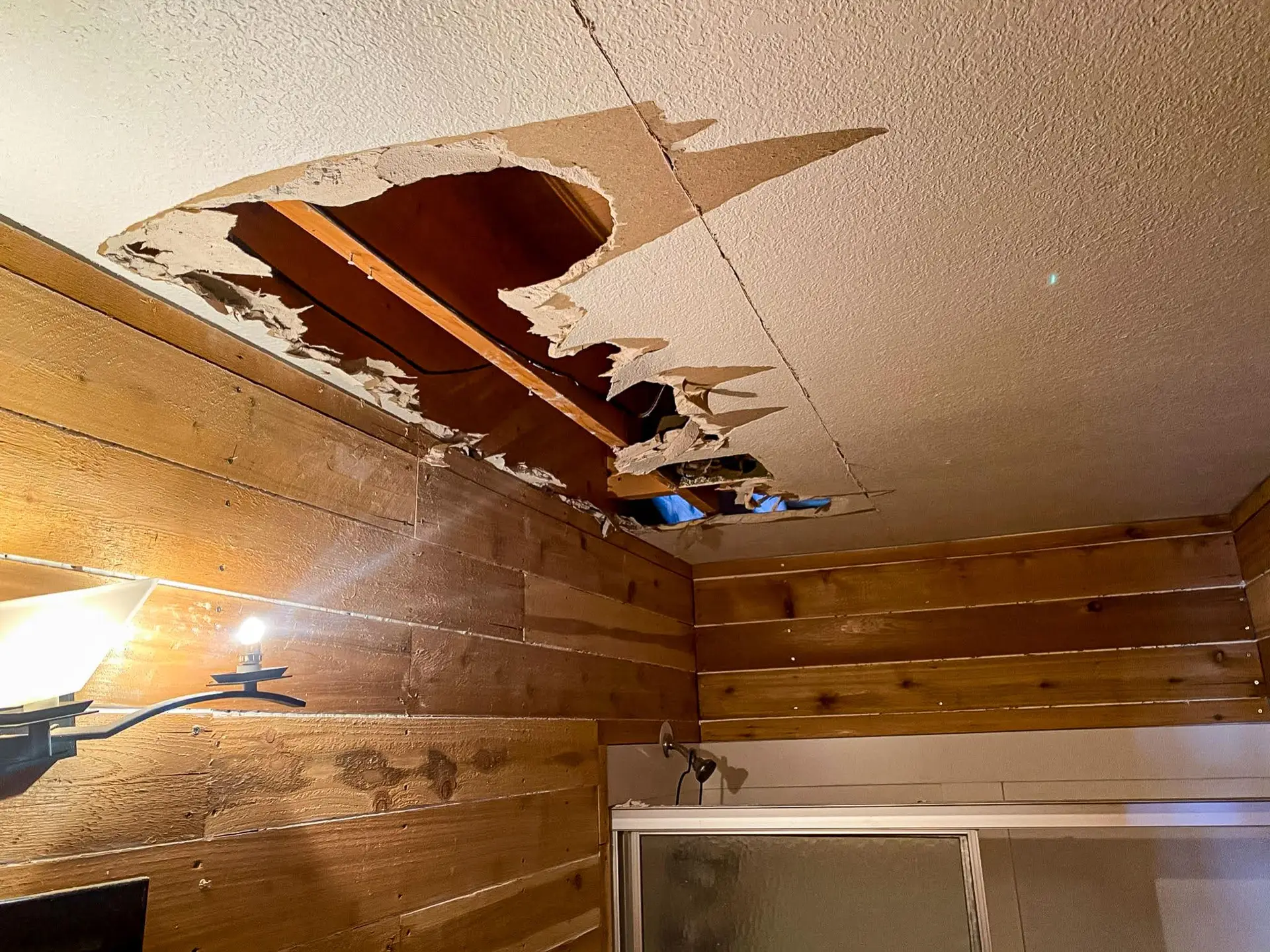
Water damage isn’t just a mess—it’s a clock. Minutes matter when water spreads into drywall, flooring, insulation, cabinets, and structural framing. If you’re searching for water damage restoration Naperville IL, you’re probably dealing with a burst pipe, basement flooding, sump pump failure, appliance leak, or storm-related intrusion—and you need a plan that stops damage now and prevents mold later.
At Not Your Average Mold Guys, we provide 24/7 emergency water cleanup, professional water extraction, structural drying, mold prevention, and documentation that supports insurance claims when applicable. This guide explains what to do immediately, how restoration should be done correctly, and what separates real mitigation from surface-level cleanup.
Water Damage Restoration Naperville IL: Why “Waiting It Out” Costs More
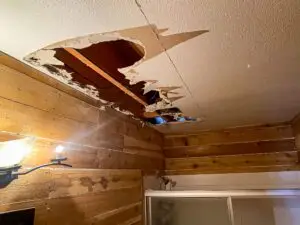
A common mistake is assuming water damage will “dry on its own” if you run a few fans. The problem is hidden saturation. Water moves under baseboards, behind walls, into toe-kicks, and through subfloor seams. Even if the surface feels dry, moisture can remain trapped in materials and create long-term odor, warping, and mold growth.
Proper restoration is built around speed, measurement, and controlled drying—not guesswork. When the drying process is done wrong, the home can look fine for a week or two and then develop musty odor, staining, and microbial growth in wall cavities and flooring layers.
Emergency Water Cleanup Naperville IL: What to Do in the First 60 Minutes
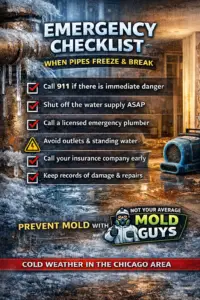
If you have active water, focus on safety and stopping the source first. Here’s the correct order of operations:
- Stop the water at the shutoff (main line or local valve) if possible.
- Turn off electricity to affected areas if water is near outlets, lights, or electrical panels.
- Document quickly with photos and video before moving items (when safe).
- Move valuables out of the wet zone (electronics, rugs, furniture legs, artwork).
- Call for emergency water cleanup to start extraction and professional drying immediately.
Standing water is the fastest route to damaged subfloors, swelling cabinetry, and odor. Fast extraction reduces saturation and lowers the total drying load.
Basement Flood Cleanup Naperville IL: The Most Common Flood Scenarios
Basements in Naperville and surrounding suburbs commonly flood due to sump pump failure, heavy storms, foundation seepage, drain issues, and plumbing breaks. Basement floods are often more severe than main-floor leaks because water pools, sits longer, and saturates framing and stored materials.
Professional basement flood cleanup Naperville IL typically requires:
- Rapid extraction (pumps + commercial extractors)
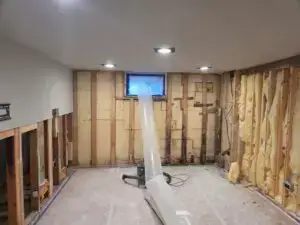
- Selective removal of saturated porous materials when needed (carpet pad, wet insulation, compromised drywall)
- Controlled drying (air movement + dehumidification sized to the moisture load)
- Moisture mapping to confirm framing and subfloor are truly dry
- Sanitization and odor control when appropriate
If the water is gray or black (from drains or sewage), restoration should also include containment and decontamination protocols to protect indoor air quality.
Water Extraction Naperville IL: Why Removing Standing Water Is Not “The Whole Job”
Extraction is essential—but it’s only phase one. A shop vac can pull water off the surface, but it can’t reliably remove moisture trapped inside:
- Drywall and insulation
- Subfloor layers and underlayment
- Cabinet toe-kicks and behind built-ins
- Wall cavities and sill plates
- Baseboard channels and floor seams
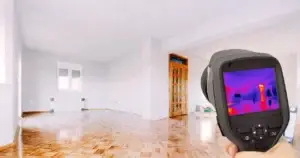
The professional difference is measurement. Moisture meters and thermal imaging identify what is wet, where it traveled, and what must be dried or removed to prevent mold and long-term structural damage.
Structural Drying Naperville IL: What “Correct Drying” Actually Means
Structural drying is where most DIY attempts fail. If indoor humidity remains high, materials re-absorb moisture and drying stalls. If air movers are placed incorrectly, you can dry the surface while leaving wet pockets inside walls and floors.
Proper structural drying follows standards and best practices established by the
Institute of Inspection Cleaning and Restoration Certification (IICRC),
which outlines professional protocols for water damage mitigation and drying.
Correct structural drying Naperville IL is a controlled process:
- Air movement to accelerate evaporation at wet surfaces
- Dehumidification to remove moisture from the air so drying can continue
- Containment when required to isolate affected zones and protect clean areas
- Daily monitoring with logged readings to confirm progress
A real restoration team doesn’t guess. They measure, log, and verify dryness with readings—then document it clearly.
Mold Prevention After Water Damage: The 24–48 Hour Risk Window
Mold doesn’t require weeks to appear. Under the right conditions—moisture, warmth, and organic material—growth can begin quickly. That’s why water damage restoration and mold remediation are so closely linked.
The
U.S. Environmental Protection Agency (EPA)
emphasizes that moisture control is the primary factor in preventing mold growth after water intrusion.
Mold prevention isn’t about masking odor or “spraying something.” It’s about eliminating moisture at the source and ensuring hidden materials are either dried properly or removed when drying isn’t feasible.
A strong mold-prevention plan may include:
- Targeted antimicrobial treatments where appropriate
- Removal of unsalvageable porous materials
- Containment if there’s already visible microbial activity
- Air filtration strategies when needed
- Humidity control to stop recurrence
For health-related context, the
Centers for Disease Control and Prevention (CDC)
notes that mold exposure can cause respiratory irritation and allergic reactions, especially for sensitive individuals.
Water Damage Restoration Process: What Not Your Average Mold Guys Does Step-by-Step
Homeowners should never be left guessing. A professional restoration response should be clear, staged, and measurable. Here’s what the process typically looks like when you call Not Your Average Mold Guys for water damage restoration in Naperville:
1) Inspection, Moisture Mapping, and Damage Classification
We identify the water source, determine affected areas (including hidden moisture), and classify the type of water intrusion. This informs what can be dried, what must be removed, and what safety measures are required.
2) Emergency Water Extraction
We remove standing water quickly to prevent deeper saturation and reduce the load on the drying system.
3) Controlled Structural Drying and Dehumidification
We set up commercial equipment sized to the job and position it based on moisture pathways—not guesswork. Drying is monitored until materials return to an acceptable dry standard.
4) Sanitization, Odor Control, and Mold Prevention Measures
We apply appropriate treatments based on the scenario. If mold is present, we shift into a remediation-focused approach to protect the building and indoor air.
5) Documentation for Insurance (When Applicable)
We provide photos, moisture readings, equipment logs, and clear notes that help support insurance claims and reduce back-and-forth.
Insurance Claims for Water Damage: What Helps (and What Hurts)
Every policy is different, but many claims become difficult because documentation is incomplete or timelines are unclear. Helpful actions include early photos/video, clear evidence of the water source, and professional logs showing drying progression and completion.
For general guidance on what to do after property damage and how claims typically work, the
Insurance Information Institute
provides a practical overview.
What often hurts a claim is delay. If water sits and becomes a mold situation, insurers may argue secondary damage occurred due to lack of mitigation. Fast response protects both the home and the claim.
Signs of Hidden Water Damage (Even When Surfaces Look Fine)
Not all damage shows up immediately. Call for an inspection if you notice:
- Musty odor or “wet wood” smell
- Soft drywall, bubbling paint, or discoloration
- Flooring that cups, lifts, or separates
- Baseboards swelling or pulling away
- Persistent humidity that wasn’t present before
- Cold spots or dampness along walls (especially lower sections)
These symptoms often mean moisture is trapped where you can’t see it—exactly where damage compounds over time.
Why Choose Not Your Average Mold Guys for Water Damage Restoration Naperville IL
When you’re dealing with water damage, you don’t need vague reassurance—you need a team that can stabilize the situation, dry it correctly, and prevent mold problems from appearing weeks later.
Naperville homeowners choose Not Your Average Mold Guys because we focus on:
- Fast emergency response for active water situations
- Commercial drying equipment and a controlled drying strategy
- Clear communication and step-by-step expectations
- Mold prevention expertise built into the mitigation process
- Insurance-friendly documentation that supports the claim workflow
We’re local, hands-on, and focused on doing the job correctly—because “good enough” drying is how homeowners end up calling again later.
Service Area: Naperville and Surrounding Suburbs
We provide water damage restoration and mold-related services throughout Naperville and nearby communities, including Aurora, Lisle, Wheaton, Woodridge, Downers Grove, and Bolingbrook. If you’re nearby and unsure, call—fast guidance can prevent unnecessary damage.
FAQ: Water Damage Restoration Naperville IL
How long does water damage restoration take?
Many projects require several days of drying and monitoring. The timeline depends on saturation level, materials affected, and how quickly the response started.
Do you have to remove drywall?
Not always. If readings show the wall assembly can be dried to standard, removal may be avoided. If insulation is saturated or moisture is trapped, selective removal may be necessary to prevent mold.
Can I just run fans and a dehumidifier?
For small surface spills, sometimes. For leaks that reach wall cavities, subfloors, cabinets, or insulation, household equipment usually can’t control humidity or remove hidden moisture reliably.
Will you help with insurance documentation?
Yes. We provide documentation that supports the mitigation phase and clarifies what was done, when it was done, and what readings confirm completion.
Call Now for 24/7 Emergency Water Cleanup in Naperville
If you need water damage restoration Naperville IL, time matters. The fastest way to reduce cost and prevent mold is to extract water quickly and start controlled drying with professional monitoring.
Not Your Average Mold Guys
Phone: (630) 401-2072
Address: 24W947 Ramm Drive, Naperville, IL 60564
Call now for emergency response, an honest assessment, and a drying plan that protects your home—not just the surface.
If you would rather contact us by email fill out the CONTACT FORM on the Contact Page