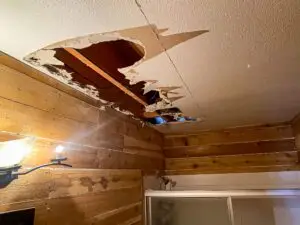

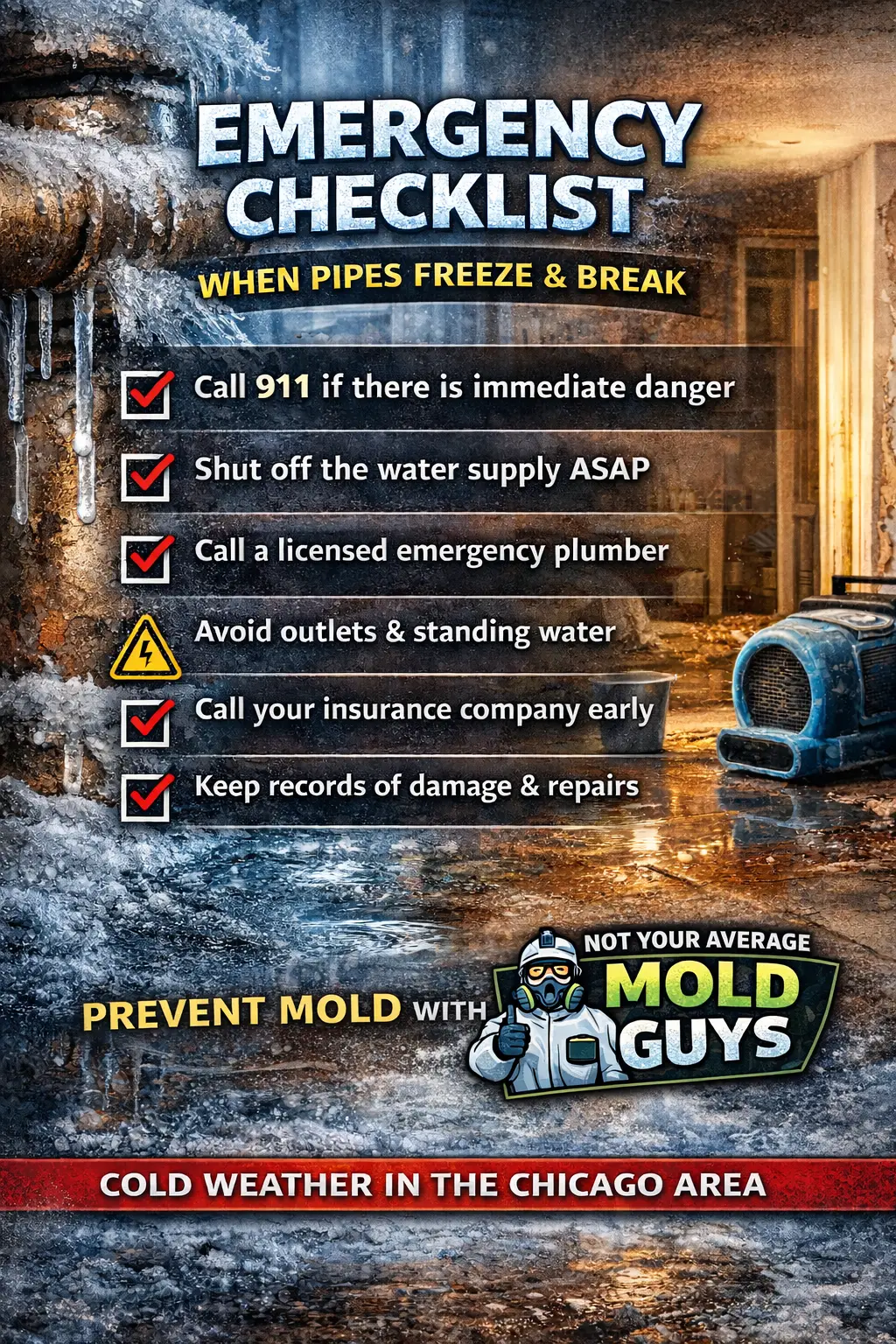
Broken pipes in Chicago are one of the most common causes of winter water damage. When freezing temperatures hit, frozen pipes can burst and leave homeowners dealing with water in the home, damaged materials, and the risk of mold growth if drying is not handled properly.
Why Pipes Break During Freezing Weather in Chicago
When temperatures drop below freezing, water inside pipes can freeze and expand. This expansion puts pressure on the pipe walls until they crack or burst. Once the ice thaws, water flows freely—often flooding walls, floors, basements, or ceilings.
Common causes of broken pipes in Chicago homes include:
-
Poorly insulated pipes
-
Unheated basements, crawlspaces, or garages
-
Sudden temperature drops
-
Exterior walls with exposed plumbing
Many homeowners don’t notice the damage until water is already spreading through the home.
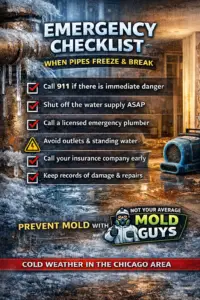
🚨 If There Is Immediate Danger
If there is electrical risk, structural danger, or uncontrollable flooding, call:
Emergency Services (Police / Fire):
📞 911
💧 Shut Off the Water
If you cannot locate or access your main water shutoff, contact your local water provider:
City of Chicago – Department of Water Management
📞 311 (City Services Hotline)
They can help with guidance or dispatch support if needed.
🔧 Call a Licensed Emergency Plumber
You’ll need a plumber to stop the source of the leak and repair the broken pipe.
What to look for:
-
24/7 emergency service
-
Licensed and insured
-
Experience with frozen or burst pipes
(Tip: Avoid companies that pressure you into unnecessary repairs during an emergency.)
⚡ Electrical Safety
If water is near outlets, breaker panels, or appliances:
-
Do not touch electrical components
-
Avoid standing water
-
Call a licensed electrician if power needs to be safely shut down
Freezing temperatures in the Chicago area can cause serious problems for homeowners—especially when pipes freeze and burst. Broken pipes during winter freezes are one of the most common causes of sudden water damage, often leaving homeowners dealing with water in their home, damaged materials, and concerns about mold growth.
If your home experiences water damage during a freeze, acting quickly and correctly is critical. Proper drying and mold prevention can make the difference between a clean recovery and long-term issues.
Contact Your Insurance Company Early
After a pipe breaks and water damage occurs, it’s important to notify your homeowner’s insurance company as soon as possible.
Why this matters:
-
Many policies have time limits for reporting water damage
-
Early documentation helps support your claim
-
Insurance may require photos, moisture readings, or inspection reports
What to do:
-
Take photos and videos of visible damage
-
Keep records of emergency repairs (plumber invoices, receipts)
-
Ask your adjuster what documentation is needed
⚠️ Important: Do not delay drying or mitigation while waiting for insurance approval. Mold and secondary damage can begin quickly if moisture is left untreated.
After the Water Is Stopped: Drying & Mold Prevention Starts
Once the immediate emergency is under control, proper drying is critical. Even small amounts of water left behind walls or floors can lead to mold growth.
This is where professional moisture checks, drying, and mold inspections help ensure your home is truly safe after a winter pipe break.
At Not Your Average Mold Guys, we help Chicago homeowners:
-
Check for hidden moisture
-
Ensure proper drying after water damage
-
Inspect for early mold growth
-
Prevent mold from starting after freeze-related flooding
What to Do If You Have Water in Your Home After a Freeze
If you discover water damage from a broken pipe, time matters.
Immediate steps to take:
-
Shut off the water supply if possible
-
Avoid using electrical outlets near standing water
-
Document visible damage for insurance purposes
-
Call a professional for water damage and mold prevention services
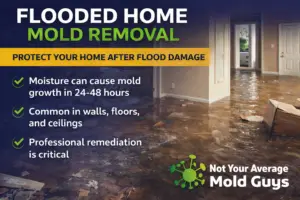
Standing water and wet materials create the perfect environment for mold to grow—sometimes within 24–48 hours.
Why Drying the Home Properly Is Critical
One of the biggest mistakes homeowners make after winter water damage is assuming that visible drying is enough. Just because a surface looks dry doesn’t mean moisture isn’t trapped behind walls, under flooring, or in insulation.
Proper drying requires:
-
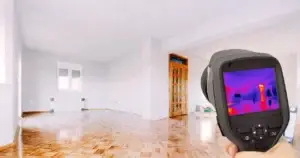
Professional moisture detection
-
Industrial dehumidification
-
Air movement and ventilation
-
Monitoring until moisture levels return to normal
Without thorough drying, hidden moisture can lead to mold growth weeks or months later.
Mold Risk After Broken Pipes and Water Damage
Mold thrives in damp, dark environments—exactly what water-damaged materials provide. After a freeze-related flood, mold can begin growing in:
-
Drywall
-
Insulation
-
Wood framing
-
Flooring and subfloors
This is why mold checks after water damage are so important. Mold isn’t always visible, and musty odors may not appear right away.
Why a Mold Inspection After Water Damage Matters
A professional mold inspection helps determine:
-
Whether mold has started to grow
-
Where moisture remains hidden
-
If remediation is needed to prevent future issues
At Not Your Average Mold Guys, we focus on identifying the root cause of mold—not just surface symptoms. Our inspections help ensure your home is truly dry and safe after water damage.
Preventing Mold After Winter Water Damage
Preventing mold isn’t just about cleanup—it’s about controlling moisture.
Key steps include:
-
Thorough structural drying
-
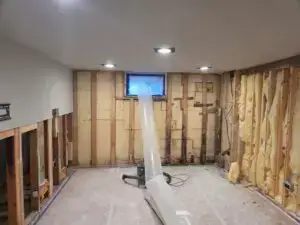
Removing damaged materials when necessary
-
Addressing humidity and airflow issues
-
Monitoring moisture levels over time
Taking these steps early can help prevent expensive mold remediation later.
Why Chicago Homeowners Should Act Quickly
Chicago’s climate creates a unique challenge for homeowners. Freeze-thaw cycles, older plumbing systems, and tightly sealed homes can all increase the risk of water damage and mold.
Ignoring moisture issues after broken pipes can lead to:
-
Structural damage
-
Poor indoor air quality
-
Health concerns
-
Costly repairs down the road
A fast, professional response helps protect both your home and your health.
How Not Your Average Mold Guys Can Help
At Not Your Average Mold Guys, we help Chicago homeowners recover from broken pipes, water damage, and freeze-related flooding by focusing on proper drying, moisture control, and mold prevention.
Our services include:
-
Water damage assessment
-
Moisture detection and monitoring
-
Drying and dehumidification guidance
-
Mold inspections and remediation when needed
We don’t rely on shortcuts or guesswork—our goal is to make sure mold doesn’t start after water damage.
Peace of Mind After a Winter Emergency
Frozen pipes are stressful, but taking the right steps—in the right order—can prevent long-term damage.
If your home experienced water damage during a freeze and you want to make sure mold doesn’t become the next problem, reach out to Not Your Average Mold Guys for an inspection.
Schedule a Mold Check After Water Damage in Chicago
If your home experienced water damage during a freeze, don’t wait to see if mold becomes a problem. A professional inspection can give you peace of mind and help prevent long-term issues.
Contact Not Your Average Mold Guys today to schedule a mold inspection or learn more about proper drying after broken pipes in the Chicago area.