
Post-Storm Mold Prevention: What Chicago Homeowners Need to Know in the First 48 Hours
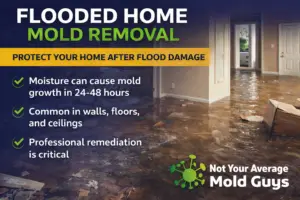
When heavy rain, roof leaks, burst pipes, or flash flooding hit your home, water damage isn’t the only threat — mold growth begins within as little as 24–48 hours. That short window is why post-storm mold prevention is one of the most important (and most misunderstood) steps in protecting your home and your health.
Not Your Average Mold Guys serves two regions that see dramatic weather shifts and severe storm activity: Austin, Texas and the greater Chicago area. Both cities experience events that trigger hidden mold growth — from Texas flash floods and humidity spikes to Midwest ice dams, basement seepage, and sump pump failures.
This guide breaks down exactly what to do in the first 48 hours after storm damage — and what not to do — so you can stop mold before it takes hold.
Why Mold Grows So Fast After a Storm
Most homeowners assume it takes a week or more for mold to develop. Unfortunately, the CDC confirms that mold begins to colonize in as little as 24 hours when moisture, oxygen, and organic material (like drywall or wood) are present.
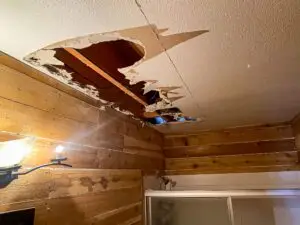
That means even a “small” amount of water — soaked carpet, a dripping ceiling, a few inches in the basement — can lead to mold that spreads behind walls, under flooring, and into air ducts where it becomes harder and more expensive to remove.
Timeline of Mold Growth After Water Damage:
- 0–24 hours: Moisture saturates building materials
- 24–48 hours: Mold begins forming on porous surfaces
- 48–72 hours: Spores spread to adjacent areas, air quality drops
- 3–7 days: Full infestation begins; odor develops
- 7+ days: Structural materials may become permanently damaged
The #1 Post-Storm Mistake: “It Looks Dry, So It’s Fine”
The biggest reason homeowners lose insurance claims or wind up with thousands in hidden mold removal costs is simple: most water damage doesn’t stay visible.
Even if surfaces feel dry to the touch, water may already be trapped:
- Inside wall cavities behind drywall
- Under floating or vinyl plank flooring
- Inside insulation or baseboards
- In subflooring or wall studs
- Behind cabinets and built-ins
- Inside HVAC ducts or returns
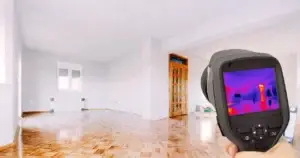
This is why true post-storm mold prevention requires moisture meters, thermal imaging, and professional drying — not box fans and open windows.
DIY Mold Prevention That *Does Not* Work
After storms, people rush to “fix” water damage on their own — but some popular tricks make the problem worse.
- 🚫 Bleach on drywall: Bleach does not penetrate porous materials and can actually feed mold.
- 🚫 Running fans without containment: Spreads mold spores into clean rooms.
- 🚫 Spraying chemicals & sealing: Traps moisture inside walls and guarantees mold later.
- 🚫 Painting over stains: Mold doesn’t care about paint — it keeps growing behind it.
- 🚫 Wet vac + dehumidifier only: Surface-level drying won’t reach subfloor and framing.
As the EPA states, once mold takes root, “the only effective way to eliminate mold is to remove the water source and physically remove contaminated materials.”
Post-Storm Mold Prevention Checklist (First 48 Hours)
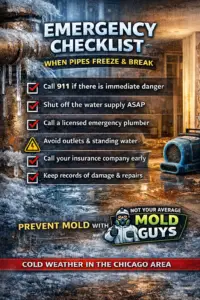
Step 1 – Document Everything for Insurance
Take photos and videos before moving or cleaning anything. FEMA and insurance adjusters require proof of water impact.
Step 2 – Stop the Water Source
Shut off main line, tarp roof, repair burst pipe, etc. Mold prevention is impossible until the leak is stopped.
Step 3 – Call a Certified Water & Mold Specialist
Not a handyman — not a carpet cleaner. You need IICRC-certified water mitigation + mold remediation experts.
Step 4 – Begin Professional Drying
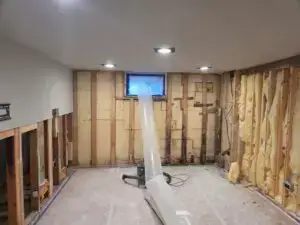
Controlled demolition, industrial air movers, dehumidifiers, and moisture mapping begin ASAP.
Step 5 – Prevent Cross-Contamination
Containment barriers + HEPA filtration protect unaffected rooms.
Step 6 – Test If Needed
If odor or visible growth begins, air/surface testing may be recommended.
Insurance & Mold: What Most Homeowners Don’t Know
Many insurance policies do not cover mold unless the homeowner acted quickly after the water event. Waiting days “to see if it dries” can void your claim.
✅ Covered: sudden and accidental water events (burst pipe, washing machine failure, roof damage from wind, etc.)
❌ Not covered: slow leaks, neglect, long-term humidity, “wait and see” delays
FEMA’s flood guide clearly states that “all porous materials exposed to flood water for more than 48 hours must be removed.”
Source: FEMA.gov
Why Post-Storm Mold Prevention Is Different in Austin vs. Chicago
🌩 Austin, TX
- Flash floods & slab foundation seepage
- High humidity accelerates mold colonization
- HVAC systems pull mold spores into ducts quickly
❄️ Chicago, IL
- Basement + sump pump failures common
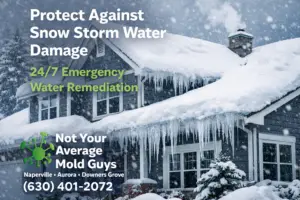
- Ice dam roof leaks introduce moisture behind walls
- Older brick homes hold moisture inside plaster & framing
Both markets need immediate post-storm mold prevention because ignoring water damage for even 2–3 days can turn a repair job into a full remediation project.
How Not Your Average Mold Guys Prevents Mold After Storm Damage
- Emergency moisture inspection (thermal + digital meters)
- Containment setup to protect clean areas
- Controlled material removal (only what’s needed)
- Industrial drying & dehumidification
- Anti-microbial treatment (EPA-approved)
- Mold clearance verification if required
- Full rebuild option — since NYAMG also provides licensed remodeling
Whether you’re in a lakefront Chicago home or a Hill Country build in Austin, our mitigation team handles water, mold, and reconstruction under one company — no sub-contractor chaos.
Warning Signs Mold Has Already Started Growing
- Musty or earthy odor
- Peeling paint or bubbling drywall
- Discoloration on walls, trim, or ceilings
- Sudden allergy or respiratory flare-ups
- Warping floors or baseboards
- Condensation or humid “pockets” in rooms
If any of these are present, you no longer need prevention — you need full remediation.
Why Choose a Licensed Mold Remediation Company — Not a “Restoration Franchise”
Not all “restoration companies” are certified or qualified to handle mold. Carpet cleaners, handymen, or insurance contractors often:
- Do not follow IICRC S520 mold standards
- Bleach & spray instead of removing contaminated materials
- Skip containment, spreading spores into HVAC systems
- Don’t offer post-test verification
Not Your Average Mold Guys is IICRC-Certified in:
- Mold Remediation (AMRT)
- Water Damage Restoration (WRT)
- Fire/Smoke Restoration
Need Post-Storm Mold Prevention or Emergency Help?
Don’t wait — the 48-hour mold clock is already ticking. Call (630) 401-2072 or request a rapid response inspection.